

Customer trust in agentic AI depends on log management that unifies all telemetry signals
Logs have always been foundational to monitoring application and infrastructure performance. But new Dynatrace research shows that the increasing deployment of AI workloads is raising the bar for what logs must deliver.
Organizations that modernize their data architectures to unify logs with traces, metrics, and other telemetry while retaining their context will earn customer trust in their AI initiatives; those that don’t will struggle as projects move from pilot to production.
Logs are the most granular, high‑fidelity record of system behavior, capturing the evidence behind IT actions and outcomes. They record errors, events, and actions, but they also require teams to piece together what happened, what it affects, and why it matters.
Now, keeping the massive influx of data coming from cloud and AI workloads connected and coherent is placing even greater importance on associating the evidence contained in logs to:
- Traces (flow and causality)
- Metrics (performance and impact)
- Security, user, and business signals (riskand outcomes)
And because agentic systems both emit and consume logs, these records increasingly function as a shared language for humans and agents, powering real‑time feedback loops for optimization and remediation.
The shift facing technical leaders
As LLMs, coding assistants, and agentic AI gain traction, telemetry volumes and costs surge, and conventional approaches force trade-offs that strip context and undermine accountability. A unified observability platform provides the environment where logs anchor truth while other signals supply coherence, enabling teams to monitor AI behavior, prevent failures, assess impact, and guide remediation with confidence.
But unifying telemetry is only half the job. At AI scale, the volume of signals makes manual correlation unsustainable, which is why intelligent, automated analysis is becoming an essential layer alongside the unified data foundation.
Based on a global survey of 450 senior IT leaders, this inaugural report on the state of log management examines:
- How AI workloads are driving explosivetelemetry growth
- Why traditional log management and datacapture practices no longer scale
- How a unified context layer that connectslogs with other telemetry supports the pathto accountable AI systems at scale
- What leaders can do to modernize logmanagement through unified observabilityas AI projects move from pilot to production
AI workloads have ignited a data explosion
Agentic AI is flooding log pipelines faster than many teams can store, query, or build trust in the telemetry. Fragmented tooling and rising demand for businessready insights are breaking traditional log management. This surge raises the stakes for unifying logs with traces and metrics, so teams have the context they need to understand AI system behavior and bolster its reliability.
KEY INSIGHTS
- AI has driven a 93% average increase in log and telemetry volume over the past year, with 20% of organizations experiencing growth above 150%.
- Organizations rely on an average of seven log and telemetry tools that force teams to manually correlate among them, which is increasingly unsustainable.
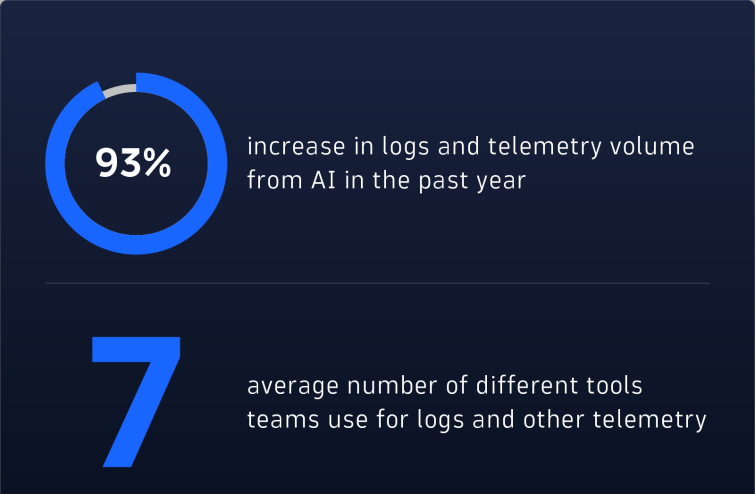
With AI driving a 93% surge in telemetry in the past year, teams are spending more time than ever stitching together logs, traces, and metrics across too many tools—an average of seven for logs alone—to understand cloud and AI-native workloads.
LOG VOLUME INCREASE DUE TO AI IN THE PAST 12 MONTHS

Fragmented telemetry is stalling AI transformation
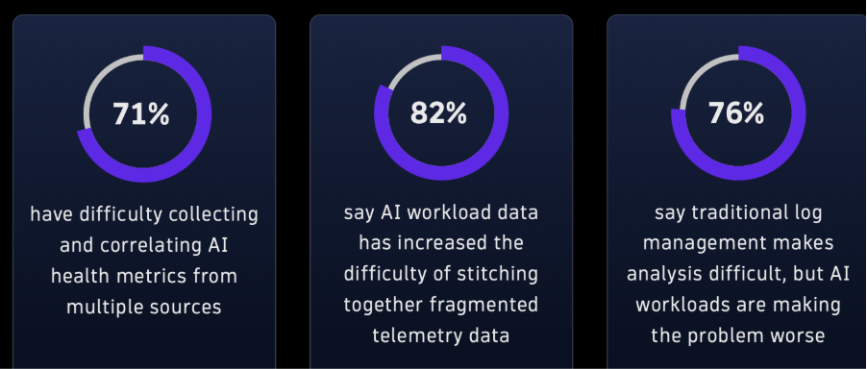
What was already difficult has become untenable: 71% have difficulty collecting and correlating AI health metrics from multiple sources. Moreover, 82% of organizations say stitching together fragmented telemetry was a nightmare even before AI.
As telemetry volume and variety expand exponentially, traditional log management approaches are breaking down. More than three quarters (76%) of organizations say the limitations of legacy techniques for ingesting and managing data make analyzing the telemetry difficult, but adding AI workloads is making the problem worse.
AI trust requires a new approach to log management
A conventional approach to log management often requires teams to limit data ingest and navigate multiple tools, siloed data, and manual processes.
This method doesn’t scale well as AI deployments increase and expand, making it difficult to detect model drift or determine the root cause of issues.
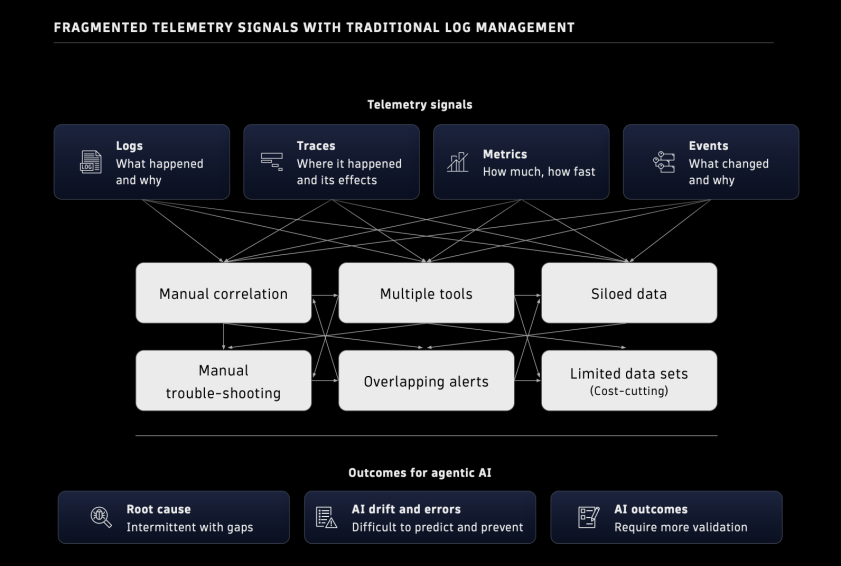
The contours of AI environments require an approach that includes flexible, standards-based log ingestion, and building a telemetry pipeline that routes logs, traces, metrics from any source to any destination. Integrating all telemetry signals in a unified context layer eliminates fragmentation and produces a complete, connected view of AI system behavior that gives teams the situational awareness they need to detect issues, understand their impact, and act confidently.
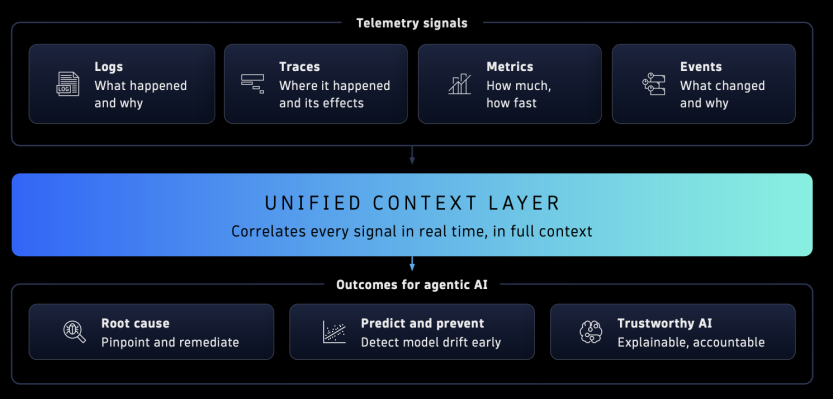
The AI data explosion demands a new log management: unified context, analyzed by AI.
One source of truth for AI at scale
As AI workloads multiply, fragmented telemetry erodes visibility just when systems require more context. Unifying all telemetry in a single repository is essential to preserve meaning, accelerate insight, and give organizations the visibility needed to scale AI workloads reliably.
- Centralize logs, metrics, traces, and events in one continuously queryable telemetry store to eliminate silos, consolidate tools, and reduce correlation overhead.
- Enrich telemetry with shared context and business relevance during ingest to explain system behavior as dependencies and interactions expand.
- Democratize access with natural language querying so more teams can explore telemetry, monitor AI behavior, and act faster and more confidently.
Logs are a crucial component in agentic workflows, but need context to tell the whole story
Logs provide crucial facts, though understanding AI system behavior requires context. Effective monitoring depends on a comprehensive, real-time ecosystem of performance metrics, end-to-end traces, user behavior, security events, and business signals—all grounded in high-fidelity log data.
KEY INSIGHTS
- Organizations rely heavily on logs for collecting and correlating AI health metrics, with one in five (22%) relying on them exclusively
- While traditional use cases for logs continue to be a priority, new modern practices driven by AI are gaining momentum
Accountability of AI workloads makes new demands of logs
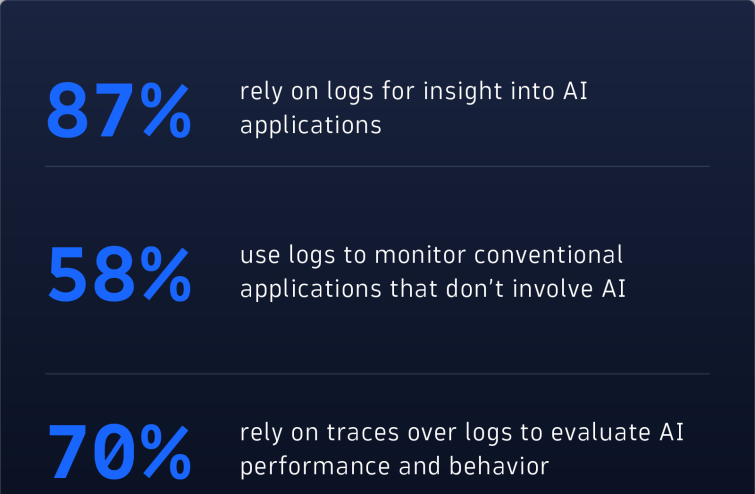
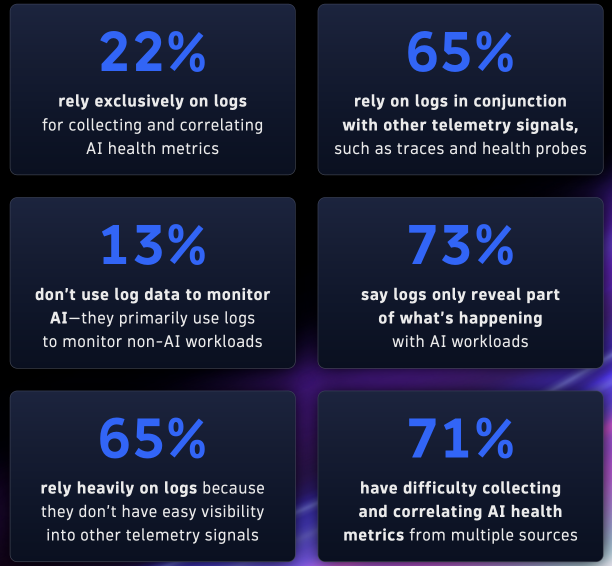
Logs remain essential for agents and the humans designing them to understand the health and performance of AI and cloud‑native workloads. Combined, 87% of organizations rely on logs for insight into their AI applications, and 22% depend on logs alone.
However, probabilistic AI models can produce inconsistent or unreliable outputs. An observability platform that combines logs, metrics, and traces—from user input to model output—can assess impact radius, determine root cause, and identify necessary remediation. Reflecting this, most organizations (65%) rely on logs in conjunction with other telemetry signals.
While 73% say logs reveal only part of what’s happening in their AI workloads, 71% struggle to collect and correlate AI health metrics across sources. As a result, 65% rely heavily on logs because they lack clear visibility into other telemetry signals
Logs show what; traces reveal where and what’s affected
Logs show what happened and why. But to pinpoint where it happened and understand the downstream effects, logs must be combined with other signals.
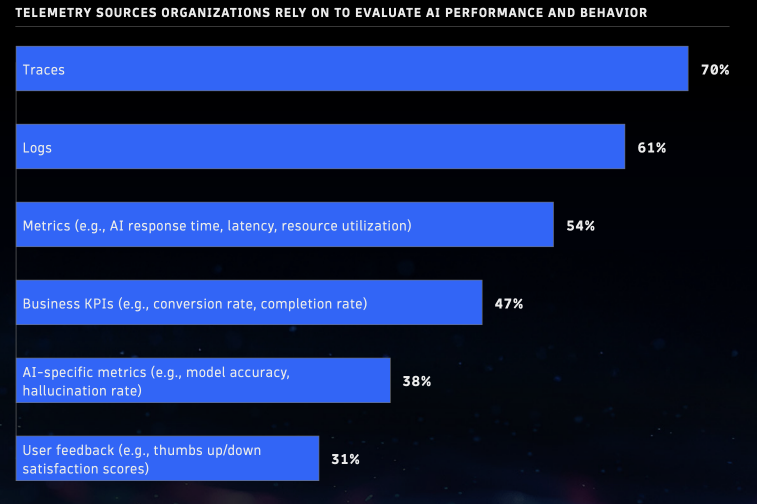
In AI systems, it’s traces that follow the full execution path—from ingestion to inference and tool use—exposing latency bottlenecks and providing the context necessary to debug non‑deterministic, black‑box behavior.
As a result, organizations rank traces
as the top telemetry source for evaluating
AI performance and behavior, followed
by logs, then metrics. All three together
in context with business KPIs, AI model
metrics, and user feedback, provide
the end-to-end observability needed to
reliably operate and scale AI applications.
Monitoring conventional workloads still predominates
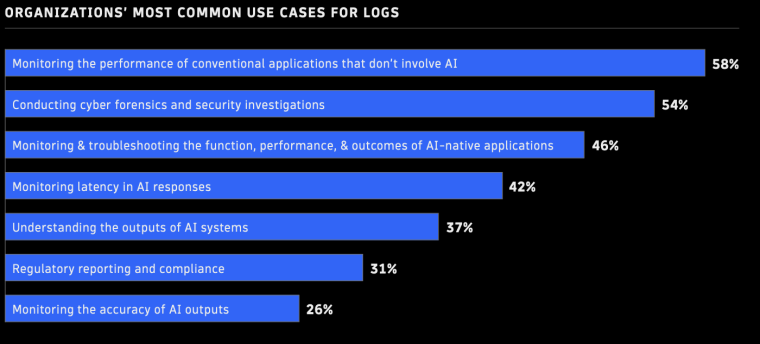
Because a logs-only approach has traditionally focused on monitoring conventional workloads, this use case still predominates (58%), followed by security investigations (54%), then monitoring AI workloads (46%).
When organizations combine log data with user behavior, security events, and business signals in a unified context layer, teams get the whole picture across the entire IT stack.
Logs need context to explain AI behavior, but rising costs are putting that explainability—and the ability to scale reliably—at risk.
Logs and traces together anchor autonomous operations
Reliable autonomous operations require two things: deterministic signals that explain system behavior end to end, and AI-driven intelligence that can act on those signals at a pace no manual process can match. Logs and traces together with other telemetry signals provide the high‑fidelity evidence. What turns this evidence into action is AI-driven analysis that can correlate, reason, and remediate within the guardrails teams put in place.
- Instrument logs to capture the full lifecycle of AI interactions, from prompt to tool calls to downstream services.
- Correlate logs with traces and other context signals automatically and deterministically to establish causation and pinpoint root causes with precision.
- Automate remediation using continuously updated and enriched log data to keep autonomous operations reliable and observable at scale.
AI has broken the economics of traditional log management architectures
As AI workloads expand, organizations are going to extraordinary lengths to control the costs of their current log management tools, which can leave them vulnerable to security, compliance, and performance gaps. To thrive, organizations must adopt a more modern and holistic approach.
KEY INSIGHTS
- Nearly half of observability budgets currently go to various log management and analytics solutions.
- As AI workloads drive explosive data growth, log costs are rising fast.
- To compensate, organizations use blunt methods to limit ingestion, which creates blind spots that increase security, compliance, and performance risk.
* including log ingestion, management, storage, indexing, rehydration, and querying
Fragmented log management requires sacrifices that don’t scale
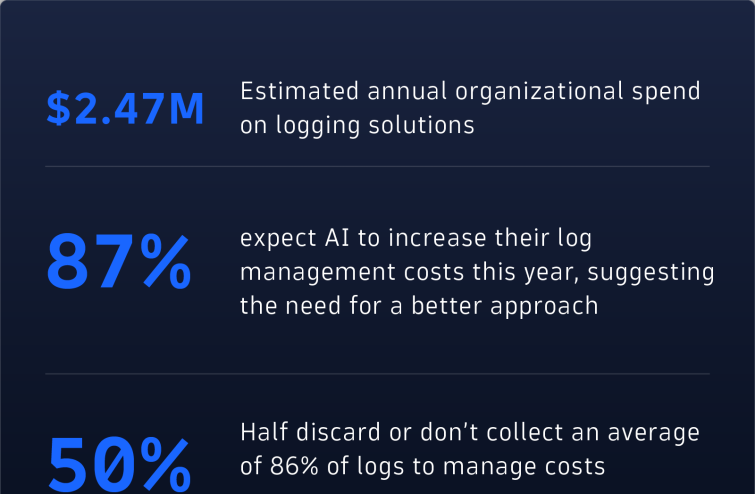
The explosion of AI‑driven telemetry is placing upward pressure on log management costs, including log ingestion, management, storage, indexing, rehydration, and querying, which respondents to this survey estimate already average nearly $2.5 million per organization. Respondents say that existing log tools now consume nearly half of observability and monitoring budgets.
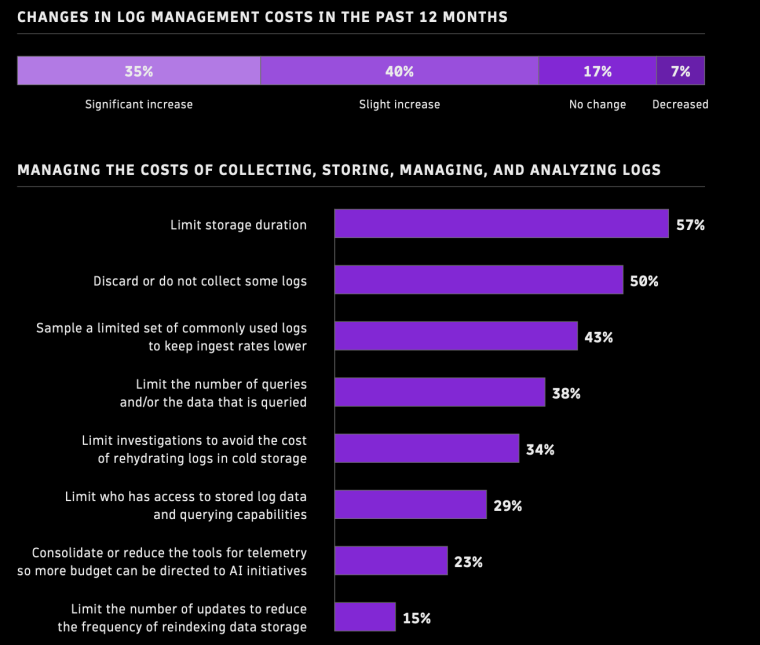
As a result, 75% of organizations report higher log management costs over the past year, with 35% seeing a significant increase—and most expect costs to rise further as AI adoption accelerates.
Although log volume is often repetitive and organizations aggregate and filter to reduce the load, current tools lack the intelligence to distinguish highvalue signals from noise. That forces teams into blunt trade-offs to manage costs that compromise their output. Even after reducing volume by filtering and aggregating, 50% of organizations estimate they don’t collect or discard an average of 86% of logs specifically due to cost considerations.
Extracting value from fragmented tools often comes at a steep price
In many organizations (67%), the cost of their existing log management approach now outweighs its value, forcing teams to limit ingestion and retention times of critical logs, reducing visibility and increasing operational risk.
Much of the strain stems from legacy log management tools and practices that weren’t designed for cloud and AI environments: 80% of organizations say traditional approaches and legacy tiered architectures can’t keep pace with AI workloads, and 74% say indexing and rehydration costs and delays make it difficult to extract value from the logs they do ingest.
67% say the cost of log management outweighs its value
80% say traditional approaches can’t keep pace with agentic AI workloads
74% say indexing and rehydration costs make it difficult to extract value from ingested logs
By optimizing and standardizing data before ingest, simplifying storage overhead, and unifying telemetry, organizations can maximize value from their telemetry and manage costs as they advance AI-driven automation and operations.
Rising costs expose the limits of traditional log management at AI scale. The next barrier is fragmented telemetry ingest.
Optimize log costs without sacrificing insight
Modern log management enables organizations to control costs while retaining full visibility as AI drives telemetry volumes to exabyte scale.
- Control log volume before ingest by filtering, sampling, and enriching logs at the source to reduce telemetry waste and risk.
- Store exabytes of logs and traces in a single, continuously queryable data layer that requires no rigid schemas, indexes, cold archives, or rehydration.
- Analyze telemetry in full context to reduce waste, improve decision‑making, and maximize the business value of telemetry from AI systems.
Fractured data capture hobbles scale and automation
Heterogeneous data is coming from everywhere, all at once. Manually correlating this data hinders automation and increases risk. Telemetry optimization should start before ingestion and be streamlined to eliminate manual overhead and drive predictive and preventive automation at scale.
KEY INSIGHTS
- The scale of telemetry generated by AI workloads is overwhelming organizations’ ability to instrument, ingest, store, and analyze it.
- Teams are spending too much time cleaning and preparing telemetry for analytics, which slows insights, limits automation, and reduces operational efficiency.
Updating instrumentation for AI workloads
Fragmented telemetry from traditional and cloud workloads was already straining data management capacity. As AI workloads proliferate and move increasingly to the edge, that pressure is intensifying: 79% of technical leaders worry their current ingest and storage approaches won’t meet future needs, and many can’t ingest logs quickly enough to support real-time analytics.
To keep pace, most organizations (80%) say they must update their instrumentation practices to support new AI-specific telemetry. For example, OpenTelemetry Generative AI Semantic Conventions, which provide standardized guidelines for structuring and collecting telemetry data to streamline monitoring, troubleshooting, and optimizing AI models. Updating instrumentation for AI workloads is an essential step to establishing AI visibility and overcoming its inherent data management challenges.
Telemetry ingestion must be open and automated
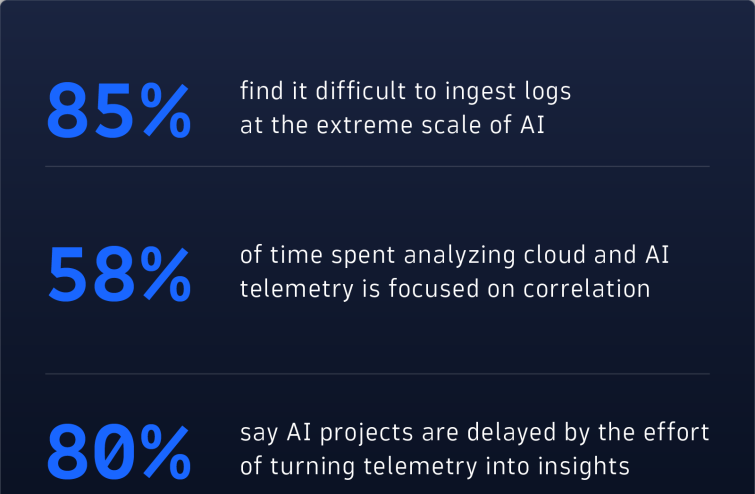
Four-fifths (80%) of organizations say the time and effort needed to turn telemetry into actionable insight is hurting customer experience and delaying AI projects from moving beyond pilot to production.
This drag comes largely from manual correlation. Teams spend an average of 58% of their analysis time stitching together logs, metrics, and traces from different sources before they can extract even limited insight.
CAPABILITIES WITH THE GREATEST IMPACT ON ACCELERATING AI WORKLOAD MANAGEMENT
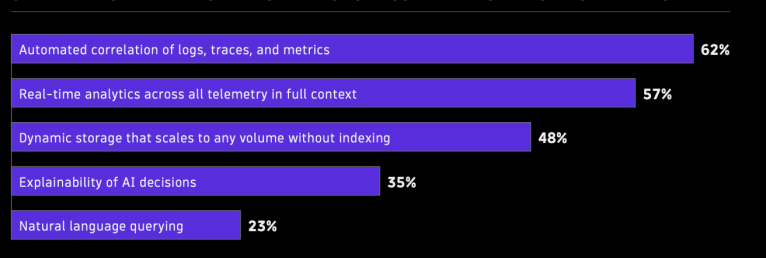
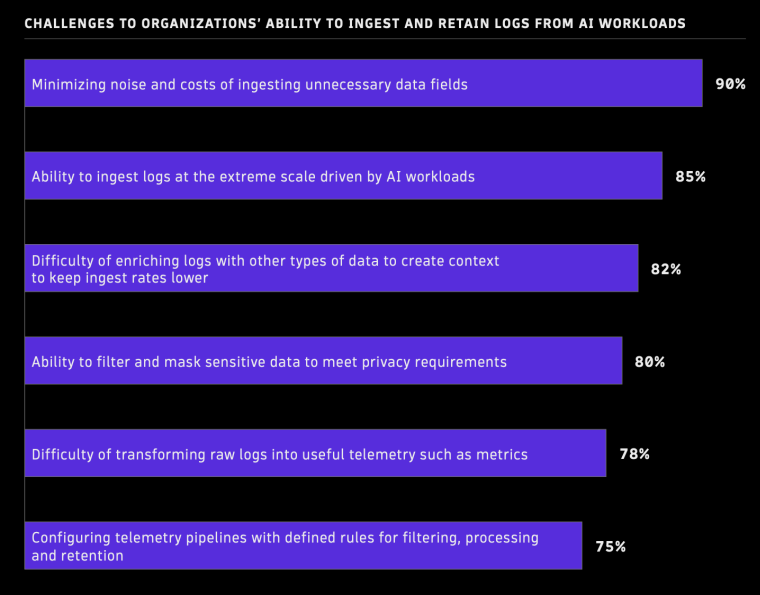
To break the bottleneck, most organizations (81%) say log ingestion and processing must be open and automated at massive scale to accelerate insight and advance the business value of autonomous decision-making.
Fragmented data and brittle instrumentation impede building trust in AI. Unifying logs with all telemetry in a single observability context layer helps teams understand AI behavior.
Optimize telemetry for AI data quality and governance
The scale of agentic AI workloads demands optimized instrumentation and telemetry pipelines to manage extreme data volumes and complexity while preserving the context needed to optimize cost, performance, and business outcomes.
- Standardize instrumentation across logs, traces, and metrics to reduce correlation overhead and accelerate insight into agent actions, reasoning traces, and lifecycle events.
- Streamline ingestion by filtering, enriching, and masking telemetry in real time, ensuring only high-value, compliant, business-relevant data is retained as volumes grow.
- Sustain exabytes of telemetry in a unified, always‑queryable observability layer to support faster analysis, reliable workloads, and data‑driven decisions.
Modern log management provides a critical context layer for effective AI monitoring
AI is raising the bar for what logs must capture and communicate. When integrated with all telemetry in a single observability environment, logs help transform data from AI workloads into fact-based, real-time knowledge optimized to help teams act confidently and accelerate their journey to autonomous operations.
KEY INSIGHTS
- Organizations are struggling to transform log data into the insights they need to manage AI workloads and understand system behavior.
- The ability to analyze logs in context with other telemetry sources is central to organizations’ ability to succeed in the age of AI
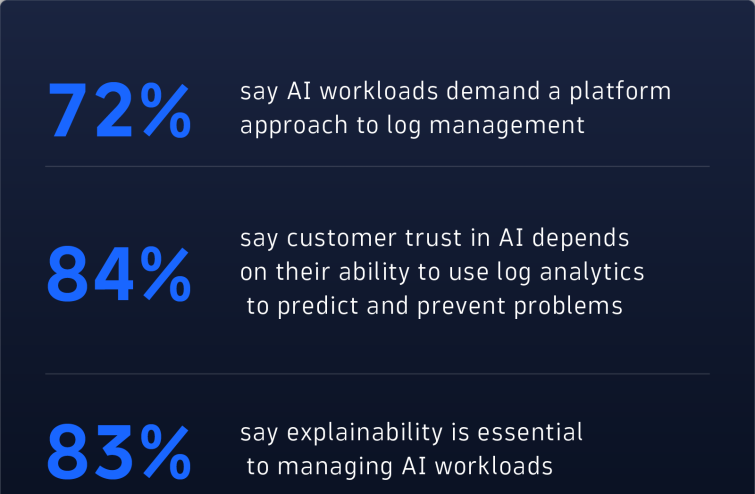
Monitoring agentic AI requires high fidelity telemetry
Successful AI initiatives depend on maintaining clear visibility into AI system behavior and performance, and building the telemetry foundation that scales from detection to autonomous operations.
Traditional log management can show what happened, but often fails to explain why, making it essential to unify logs with distributed tracing to detect, diagnose, and ultimately prevent issues before they emerge.
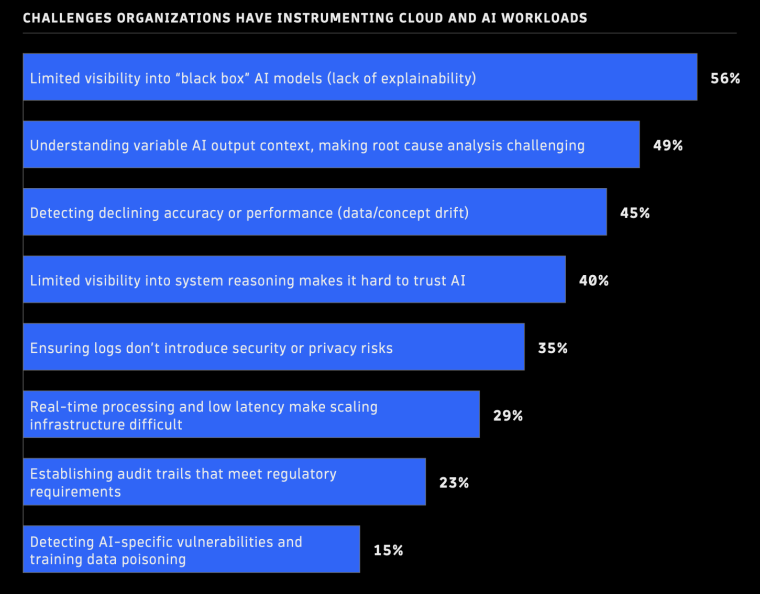
Facts fuel understanding of AI system behavior
To understand why an AI system behaved as it did, teams must link outputs to realtime system behavior, dependencies, and business impact, grounding the analysis that autonomous operations depend on in fact rather than assumption.
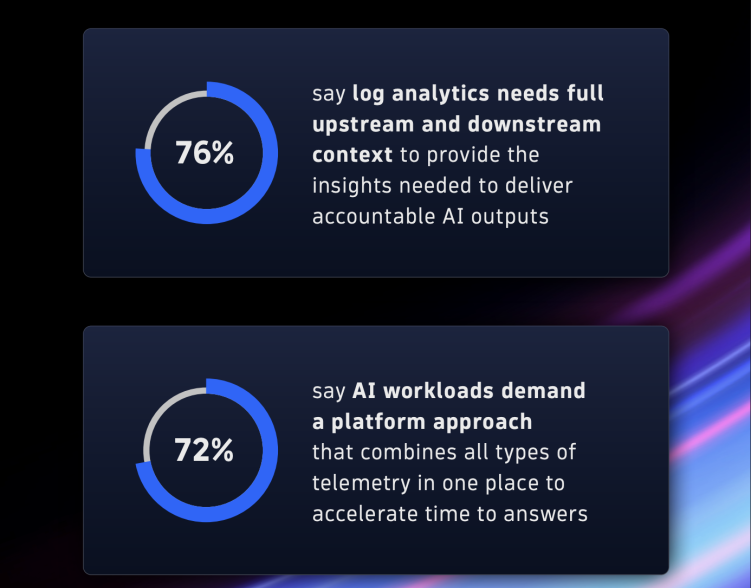
Reflecting this need, 76% of organizations say log analytics requires full upstream and downstream context to deliver accountable AI outputs, while 72% view individual, standalone logging tools as obsolete, in favor of a platform approach that combines all types of telemetry in one place.
With unified telemetry and full observability, teams can detect issues faster, understand their impact, and build the foundation necessary to drive reliable AI applications and autonomous operations.
AI demands a unified approach with critical capabilities
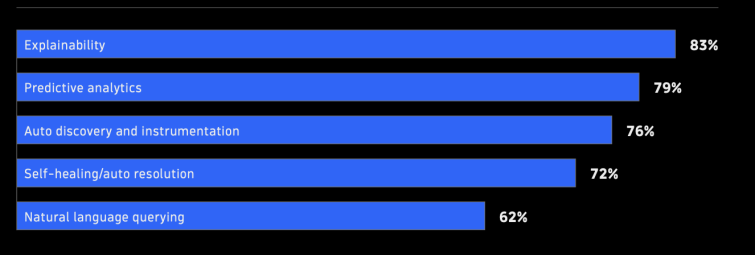
Managing AI effectively requires specialized capabilities that build trust in how AI workloads are deployed and scaled. Explainability, predictive analytics, and auto-discovery and instrumentation ranked highest among respondents. A majority also pointed to selfhealing, auto-resolution, and natural language querying as essential capabilities.
CAPABILITIES ESSENTIAL OR VERY IMPORTANT TO ORGANIZATIONS’ ABILITY TO MANAGE AI
Open and automated data ingest, a unified context layer, AI-driven analytics, and data storage that’s always hydrated and queryable enable these capabilities so organizations can build preventive operations and trust in AI.
Unified observability builds AI trust. Leaders can turn that context and control into sustainable action and reliable results.
Enabling preventive operations for trustworthy agentic AI
Preventive operations depend on turning logs and traces into predictive intelligence that explains agent behavior and enables action before issues impact customers.
- Correlate logs with distributed traces automatically to capture both decision‑level detail and end‑to‑end causality, creating a reliable foundation for understanding and acting on AI system behavior.
- Analyze telemetry in real time and full context to detect early signals of drift, performance degradation, or abnormal unexpected results.
- Automate remediation using this grounded insight to reduce risk, strengthen reliability, and safely scale AI-driven operations.
The future of AI automation belongs to organizations that can unify logs with traces, metrics, and other telemetry in context
AI is the defining driver of business transformation in 2026, and logs will help determine whether that transformation scales with confidence or stalls in noise as AI floods pipelines with telemetry that teams can’t seamlessly store, query, or rely on using conventional practices.
- AI is a data economy constrained by trust. Organizations can move more quickly from pilots to durable automation when they can anchor AI behavior in reliable evidence.
- AI is demanding more from logs. With a 93% surge in logs and telemetry, budgets—and trade‑offs—are rising. Organizations can’t afford to discard telemetry and lose fidelity just as AI demands more visibility.
- Unifying logs with other telemetry signals provides the crucial context layer for agentic AI. Logs show what happened and why, traces show flow and causality, and other signals reflect end-user experience, business outcomes, cost management, and performance.
- Integrated telemetry opens the door to preventive operations. For AI projects to be successful in production and at scale, teams need open, optimized, and automated ingestion and real‑time analytics to predict and prevent issues.
Enabling this future requires that teams build a unified, context-driven foundation where logs, traces, and related telemetry are continuously available to power predictive, automated operations. That foundation must also be intelligent enough to find problems faster, understand their impact, and guide the right response. Log management success in the AI era means reliable AI automation, less toil, and fewer customer-impacting incidents.
Methodology overview
This report is based on a global survey of 450 senior leaders and decision makers directly involved in or responsible for log management solutions in large enterprises with annual revenues
of $750 million or more, and that are currently exploring or have already deployed custom use cases for AI. It was conducted and analyzed by Coleman Parkes on behalf of Dynatrace during January and February 2026.
Industry verticals: Software & Digital, Retail, Financial Services, Education, Government / Public Sector, Telecommunications, Healthcare, Energy & Utilities, Manufacturing, Construction, Real Estate, and Professional Services.
Respondent roles: CIO, COO, CTO, Head of IT, Senior IT Manager,Head of IT Operations, Platform Engineering Manager, VP of Engineering, Site Reliability Engineering Manager.
Respondent countries: United States (150), Europe (150) including: UK, Ireland, Netherlands, Sweden, Norway, Denmark, Finland, Germany, and France, and APAC (150), including: India, Singapore, Australia, New Zealand, Thailand, and Malaysia.
All findings were analyzed to uncover enterprise strategies, challenges, and success factors for scaling log management practices amidst the growth of AI workloads across global markets.
Additional findings
- 85% of organizations say AI and cloud-native workloads are causing a data explosion.
- 76% of respondents say managing the costs associated with log management, storage, and analytics affects their monitoring strategy for AI workloads.
- 60% of organizations are moving away from traditional log management tools because they don’t meet the needs of their AI and cloud-native workloads.
- 83% of organizations say that to be effective, log management must be part of a context-based system that can trace AI actions and decisions from end to end.
- 73% of organizations say logs only reveal part of what’s happening with their AI workloads.
Global data summary
U.S.
- Respondents in the U.S. report the greatest (99%) increase in logs and telemetry from AI workloads in the past 12 months—significantly higher than their counterparts in Europe (90%) and APAC (89%).
- Organizations in the U.S. (28%) are more likely than those in Europe (19%) and APAC (19%) to rely exclusively on logs for collecting and correlating AI health metrics.
- Only 54% of respondents in the U.S. say they are moving away from traditional log management tools because they don’t meet the needs of AI and cloud-native workloads, compared to 60% in Europe and 66% in APAC.
- Organizations in the U.S. (51%) are least likely to limit storage duration to control the costs of log management, compared to 67% in APAC and 53% in Europe.
- Respondents in the U.S. (31%) are ahead of their counterparts in Europe (21%) and APAC (25%) when it comes to using logs to monitor the accuracy of AI outputs.
- U.S. respondents are least concerned about problems gaining visibility into ‘black box’ AI models to understand how they arrive at specific conclusions, with less than half (49%) identifying this as a challenge, compared with 56% in Europe and 62% in APAC.
- Technical leaders in the U.S. are slightly less pessimistic about the ability of their current telemetry ingest and storage approaches to meet their future needs, with 71% highlighting this as a concern, compared with 80% of respondents in APAC and 87% in Europe.
Europe
- Organizations in Europe spend the lowest on log management solutions each year, investing $2.34m on average, compared to $2.61m in APAC and $2.47m in the U.S.
- Respondents in Europe expressed the greatest difficulty with logs only revealing part of what’s happening with their AI workloads (79%), compared with 73% in APAC and just 68% in the U.S.
- Organizations in Europe (53%) are less likely to limit storage duration to control the costs of log management, compared to their counterparts in APAC (67%).
- European organizations (35%) are leading the way in using logs for regulatory reporting and compliance purposes, ahead of their counterparts in APAC (25%) and the U.S. (32%).
- Organizations in Europe are least likely (27%) to find it difficult to identify AI model drift, hallucinations, and inaccuracies using logs alone, compared to those in the U.S. (37%) and APAC (37%).
- Only 15% of organizations in Europe are concerned about challenges in establishing compliance and audit trails that meet regulatory requirements for AI systems, compared to 32% in the U.S., and 22% in APAC.
Asia Pacific
- Respondents in APAC are the least reliant (51%) on logs to evaluate AI performance and behavior, compared to companies in the U.S. (67%) and Europe (65%).
- Organizations in APAC have the largest annual budgets for log management solutions, spending $2.61m on average, compared to $2.47m in the U.S. and $2.34m in Europe.
- Respondents in APAC were most likely to rely heavily on logs because they don’t have easy visibility into other telemetry signals (74%), compared to 61% in the U.S. and 58% in Europe.
- Organizations in APAC (67%) are most likely to limit storage duration to control the costs of log management, compared to 51% in the U.S. and 53% in Europe.
- Respondents in APAC (39%) are lagging behind their counterparts in the U.S. (48%) and Europe (51%) when it comes to using logs to monitor and troubleshoot issues with AI-native applications.
- Organizations in APAC are least likely (49%) to find it difficult to ingest, manage, and analyze all the logs associated with AI systems quickly and at scale, compared to firms in the U.S. (58%) and Europe (59%).
- Companies in APAC are most likely (74%) to feel that the cost of their current log management approach outweighs its benefits, compared with 69% in Europe and 57% in the U.S.
- Ensuring logs do not increase data security and privacy concerns, such as potential data breaches or compliance with regulations like GDPR or HIPAA is least concerning to respondents in APAC (29%), compared to 32% in Europe and 43% in the U.S.
Industry data summary
Financial services
- Financial services organizations have the third highest annual budget for log management solutions at $2.99m, behind only the software and digital ($3.47m), and healthcare ($3.90m) industries.
- Respondents in the financial services sector are least likely to find it difficult to collect and correlate AI health metrics from multiple sources (64%).
- Companies in the financial services industry are most reliant on logs to monitor the performance of non-AI-native applications (70%), followed by telecommunications (66%) and software and digital (66%) service providers.
- Technical leaders in financial services are the most concerned about the ability of their current telemetry ingest and storage capabilities to meet their future needs, with 91% of respondents highlighting this as an issue.
- Respondents in the financial services industry (91%) were the second most likely to agree that customer trust depends on their ability to use log analytics to predict and prevent problems before they impact anyone, behind only professional services (92%).
Retail and ecommerce
- Organizations in the retail industry dedicate amongst the lowest proportion (40%) of their budget for monitoring and observability to log management and analytics — ahead of only professional services (39%).
- Retailers are the most likely (84%) to see an increase in log management budgets in the next 12 months as a result of their plans for AI, compared to the average of 70%.
- Organizations in the retail sector (30%) are amongst the most likely to rely exclusively on logs for collecting and correlating AI health metrics, behind only the construction industry (40%).
- Retailers (67%) are the second most likely to limit storage duration to control the costs of log management, behind only organizations in the government and public sector (69%).
- Organizations in retail (42%) are leading the way in using logs for regulatory reporting and compliance purposes, ahead of their counterparts in the government and public sector (38%) and financial services (36%).
- Retail organizations are least likely (35%) to find it difficult to ingest, manage, and analyze all the logs associated with AI systems quickly and at scale, compared to 66% in government and public sector and 61% in financial services.
Government and public sector
- Compared to all other industries, respondents in the government and public sector reported the lowest (30%) increase in logs and telemetry from AI in the past 12 months.
- Alongside the education industry, organizations in the government and public sector are amongst those that rely on the fewest different tools to monitor logs and other telemetry, with an average of just four.
- Organizations in the governmentand public sector are the least likely (62%) to see an increase in log management budgets in the next 12 months as a result of their plans for AI, compared to the average of 70%.
- Government and public sector organizations (69%) are most likely to limit storage duration to control the costs of log management, followed by 67% of retailers and 66% of companies in the software and digital industry.
- Just 3% of respondents in the government and public sector said their organization is looking to consolidate or reduce the number of telemetry tools they use to free up budget for AI initiatives—the lowest of any industry.
- Teams in the government and public sector dedicate the joint lowest proportion (50%) of time spent analyzing cloud and AI-native telemetry to correlating logs, metrics, and traces from different sources, tied with companies in the manufacturing industry.
Software and digital
- Software and digital companies have seen the greatest increase (127%) in logs and telemetry from AI in the past 12 months, followed by telecommunications (125%), and energy and utilities (123%).
- Organizations in the software and digital sector have the second highest annual budget for log management solutions at $3.47m, behind only the healthcare industry ($3.90m).
- Respondents in the software and digital sector were amongst the most likely to rely heavily on logs because they don’t have easy visibility into other telemetry signals (70%), behind only the education (73%) and manufacturing (76%) industries.
- Companies in the software and digital industry (66%) are amongst the most likely to limit storage duration to control the costs of log management, behind only retailers (67%) and the government and public sector (69%).
- Software and digital companies are most likely (75%) to feel that the cost of their current log management approach outweighs its benefits, followed by those in the energy and utilities (73%) and retail (72%) sectors
Education
- Respondents in the education sector reported amongst the smallest (32%) increase in logs and telemetry from AI in the past 12 months, higher only than the government and public sector (30%).
- Alongside the government and public sector, organizations in education are amongst those that rely on the fewest tools for logs and other telemetry, using four on average.
- Respondents in the education sector were amongst the most likely to rely heavily on logs because they don’t have easy visibility into other telemetry signals (73%), behind only the manufacturing industry (76%).
- Organizations in the education sector discard the second highest proportion (89%) of logs due to cost considerations, behind only energy and utilities (91%).
- The education sector (61%) is leading the way when it comes to using logs to monitor and troubleshoot issues with AI-native applications, followed by telecommunications (54%) and software and digital (53%) companies.
- Teams in the educational sector dedicate 64% of their time spent analyzing cloud and AI-native telemetry to correlating logs, metrics, and traces from different sources – a higher proportion than any other industry.
Manufacturing
- Organizations in the manufacturing industry expect to experience amongst the lowest impact from AI on their log management budgets, with just 63% expecting to see an increase. Only the government and public sector indicated a lower impact, with 62% of respondents anticipating an increase.
- The manufacturing industry is the most heavily reliant on logs because they don’t have easy visibility into other telemetry signals, as indicated by 76% of respondents.
- Teams in manufacturing organizations dedicate the joint lowest proportion (50%) of time spent analyzing cloud and AI-native telemetry to correlating logs, metrics, and traces from different sources, tied with public sector organizations.
- Manufacturing firms are the most likely (71%) to be moving away from traditional log management tools because they don’t meet the needs of their AI and cloud-native workloads, surpassed by only the real estate industry (73%).
- Manufacturers are taking the fewest measures to manage the costs of log analytics, with only 20% limiting queries or sampling more constrained data sets, compared to the wider average of 38% and 43% respectively.
- Organizations in the manufacturing sector are most likely (76%) to find it difficult to ingest, manage, and analyze all the logs associated with AI systems quickly and at scale, compared with 67% in the second most likely industry (energy and utilities).
- Respondents in the manufacturing sector were most likely (85%) to say that indexing and rehydration costs and delays make it difficult to unlock value from the volume of logs they ingest from cloud and AI systems.
Turn telemetry into agentic AI intelligence
AI workloads are overwhelming legacy log management—driving higher costs, lost context, and fragile automation. Moving forward requires a unified observability approach that automatically connects logs with traces, metrics, and other telemetry to ground AI decisions in reality.
- Learn how Dynatrace, an observability platform powered by AI and built for AI, modernizes log management to find problems faster, control costs, and analyze logs in full context, and scale your AI workloads with confidence as part of unified observability. →
- Experience it firsthand in the Dynatrace Playground, and explore how always‑queryable logs, real‑time analytics, and contextual telemetry support your own AI‑driven use cases. →
Dynatrace named a Leader in the 2026 Gartner® Magic Quadrant™ for Observability Platforms
Read the complimentary report to see why Gartner positioned us highest for Ability to Execute in the latest Magic Quadrant.
This graphic was published by Gartner, Inc. as part of a larger research document and should be evaluated in the context of the entire document. The Gartner document is available upon request from Dynatrace. Dynatrace was recognized as Compuware from 2010-2014.

Trusted by thousands of top global brands



Try it free
