

Developers deploy on production systems at lightning speed every day. Site Reliability Engineers (SREs) strive to maintain production stability yet face an impossible trade-off: hamper releases with rigid security policies or risk shipping software riddled with vulnerabilities. Dynatrace Runtime Vulnerability Analytics and Security Posture Management flips this dynamic by giving SREs real-time visibility into exposed vulnerabilities and misconfigurations in production, allowing them to prioritize and remediate threats more quickly. This blog explores how an observability-driven approach puts SREs in control of security, compliance, and uptime—without sacrificing delivery velocity.
Software teams outpace security
Modern software teams have embraced agile development practices, DevOps, and continuous integration/continuous deployment (CI/CD) pipelines. While this speeds up innovation and value delivery to the end customer, it also floods production environments with frequent code changes and new infrastructure—often outpacing the ability to fully verify security compliance before deployment.
Challenges for the modern SRE
Oftentimes, organizations try to address this challenge by rolling out security tools throughout the entire software development lifecycle (SDLC), making sure no unscanned code makes it into production.
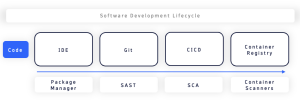
However, a couple of challenges arise with this setup, which leave SREs in a position of balancing a difficult tradeoff:
- Mission-critical role. SREs are accountable for system stability, ensuring users and businesses aren’t affected by downtime or compromised data.
- Conflicting pressures. SREs want to enforce a “zero vulnerabilities in production” policy. However, developers need to ship product features quickly to remain competitive – a difficult decision when SDLC tools find thousands of vulnerabilities.
- Lack of visibility. For SREs to gain insight into their vulnerability risks, they have to painstakingly pull together multiple data sources from their development teams. However, those only represent a point in time when the scan happened. In other words, they are blind to real-time risk and don’t have visibility into what is actually exposed in production.
- Exposure to zero-day vulnerabilities. Every week, approximately 700 new CVEs get published – a nightmare for any SRE who is responsible for the security of production systems. With the frequent turnover of deployments and complex microservice architectures, it’s impossible to maintain an overview of which deployed assets are vulnerable and need attention.
- Mounting anxiety. To enable fast-value creation with digital products, SREs are forced to allow vulnerabilities to make it into production. Without real-time insights into which they are exposed and where they reside, pinpointing the truly critical issues can feel like guesswork.
This friction leads to watered-down policies, sleepless nights, and a constant sense that there is a gap in the defense—right where it matters most: in production.
Closing the gap
Dynatrace Runtime Vulnerability Analytics and Security Posture Management bridges exactly this gap between continuous delivery speed and SREs’ need for operational security. Rather than relying solely on static scans or best-effort CI/CD or exposure checks, it brings risks caused by vulnerabilities and misconfigurations into clear focus while applications and infrastructure are actually running.
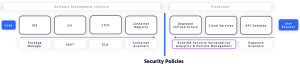
Key attributes of a robust runtime vulnerability analytics solution:
- Production-centric insights. Identifies which vulnerabilities are actively exposed and which are connected to critical data assets, enabling SREs to prioritize real threats and reduce noise.
- Observability at scale. Works alongside an observability platform that tracks infrastructure, application performance, and security events in real time.
- Automated detection. Identifies exposed vulnerabilities or configuration drifts the moment they appear in production. (Learn more about Dynatrace Workflow Automations.)
- Integrated with DevOps workflows. Serves as a seamless layer in the existing CI/CD pipeline, ensuring it doesn’t obstruct the pace of innovation. (Learn more about security integrations.)
Securing production environments with Dynatrace
How can customers secure their production environments with Dynatrace security products?
In many proof-of-concept (POC) scenarios, development teams are overwhelmed by long, unprioritized lists of vulnerabilities and alerts. Manually triaging, assigning, and resolving these issues slows down delivery and often leads to weakened security admission policies—just to keep value flowing to customers.
Dynatrace helps cut through the noise by empowering SREs to focus on what truly matters. Here’s how:
- Vulnerabilities App (Runtime Vulnerability Analytics)
Eliminate endless lists of vulnerabilities. Instead, leverage intelligent prioritization that highlights critical exposures based on real-time observability context—so SREs and developers can focus on what’s actually exploitable in production. - Security Posture Management
Continuously monitor your live production environments for misconfigurations and policy violations. This enables your systems to stay compliant and secure without manual checks or guesswork. - Contextual Insights & Remediation Guidance (Code-Level Vulnerabilities)
Go beyond surface-level alerts. Dynatrace pinpoints the exact library or code snippet responsible for a vulnerability, enabling developers to fix issues quickly and accurately—no more hunting through codebases. - Continuous Feedback Loop (Automations, Workflows, and Integrations)
Share real-time vulnerability data across development and product teams. This capability fosters a culture of secure coding and supports security becoming a shared responsibility— not a bottleneck.
Looking ahead
Dynatrace continues to evolve its security capabilities to meet the growing demands of modern production environments. Our roadmap includes deeper integrations with incident management platforms, expanded support for SDLC security tools, and enhanced AI-driven threat intelligence.
We’re also investing in more out-of-the-box workflow automations to streamline vulnerability detection and remediation—reducing manual effort and accelerating response times.
Our mission remains clear: to empower Site Reliability Engineers with end-to-end visibility and control, from code creation to live production. With Dynatrace, SREs can focus on strengthening system resilience, confident that security risks won’t silently undermine operational stability.
By tapping into real-time, production-focused insights, Site Reliability Engineers can align reliability and agility under one cohesive framework—and truly rest easier knowing that vulnerabilities won’t stay hidden for long.
Continue reading to learn more about how Dynatrace is empowering SREs to improve availability, performance, and user experience and solve problems proactively with full-stack visibility and real-time insights.



Looking for answers?
Start a new discussion or ask for help in our Q&A forum.
Go to forum