


All
0 Results filtered by:

We couldn't find any results
You can search all listings, or try a different spelling or keyword. Still nothing? Dynatrace makes it easy to create custom apps.
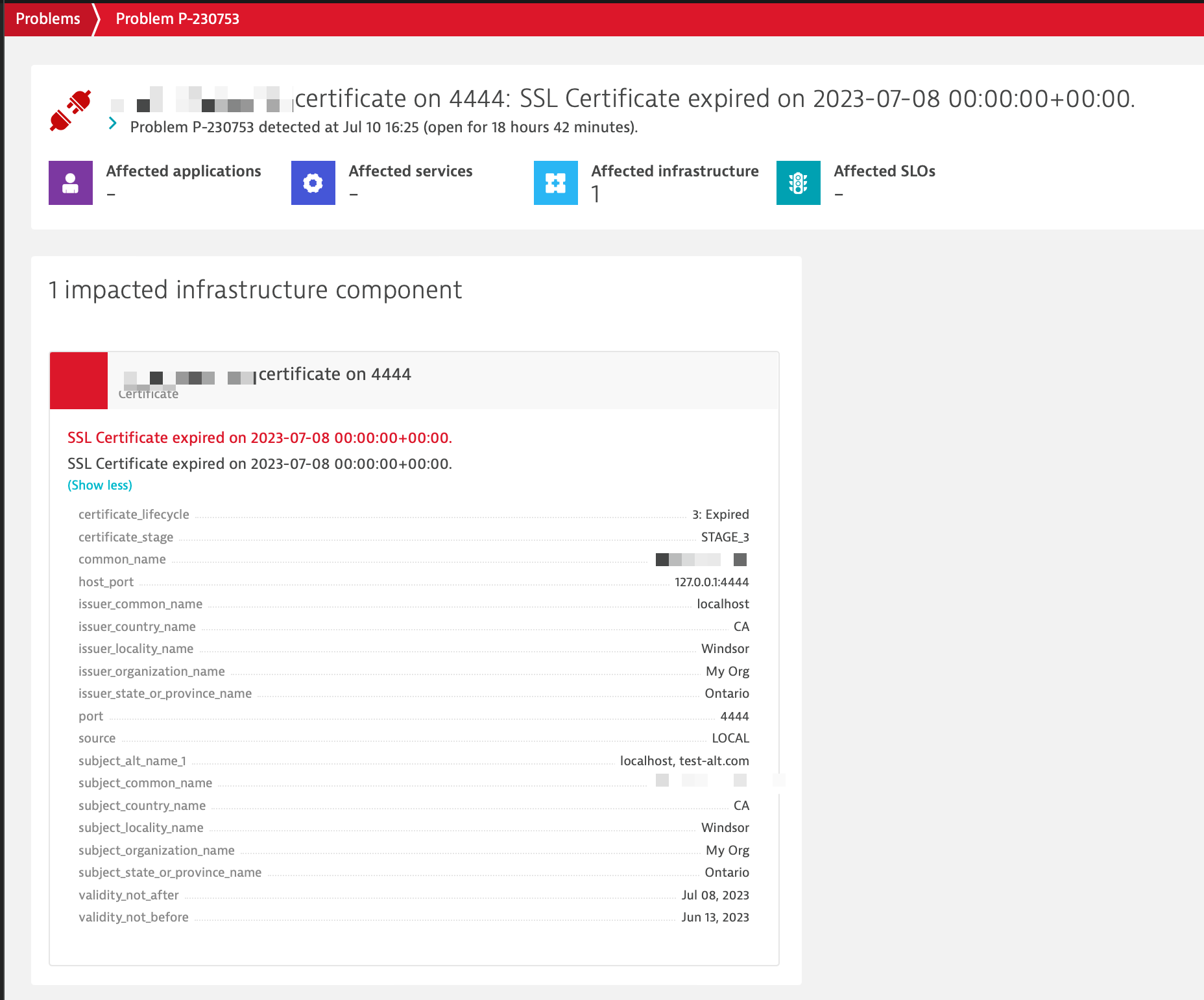
 SSL Certificate Monitor
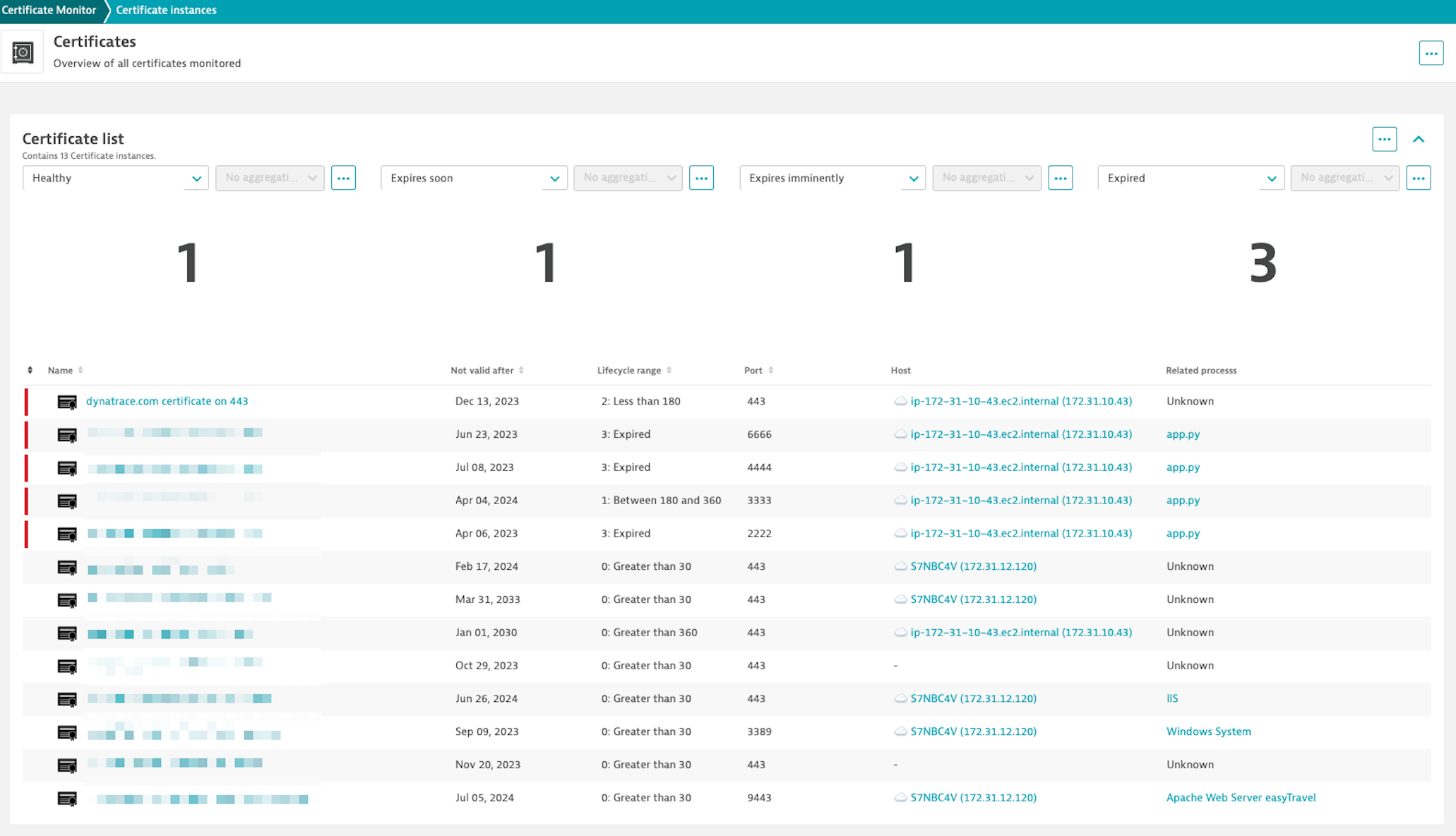
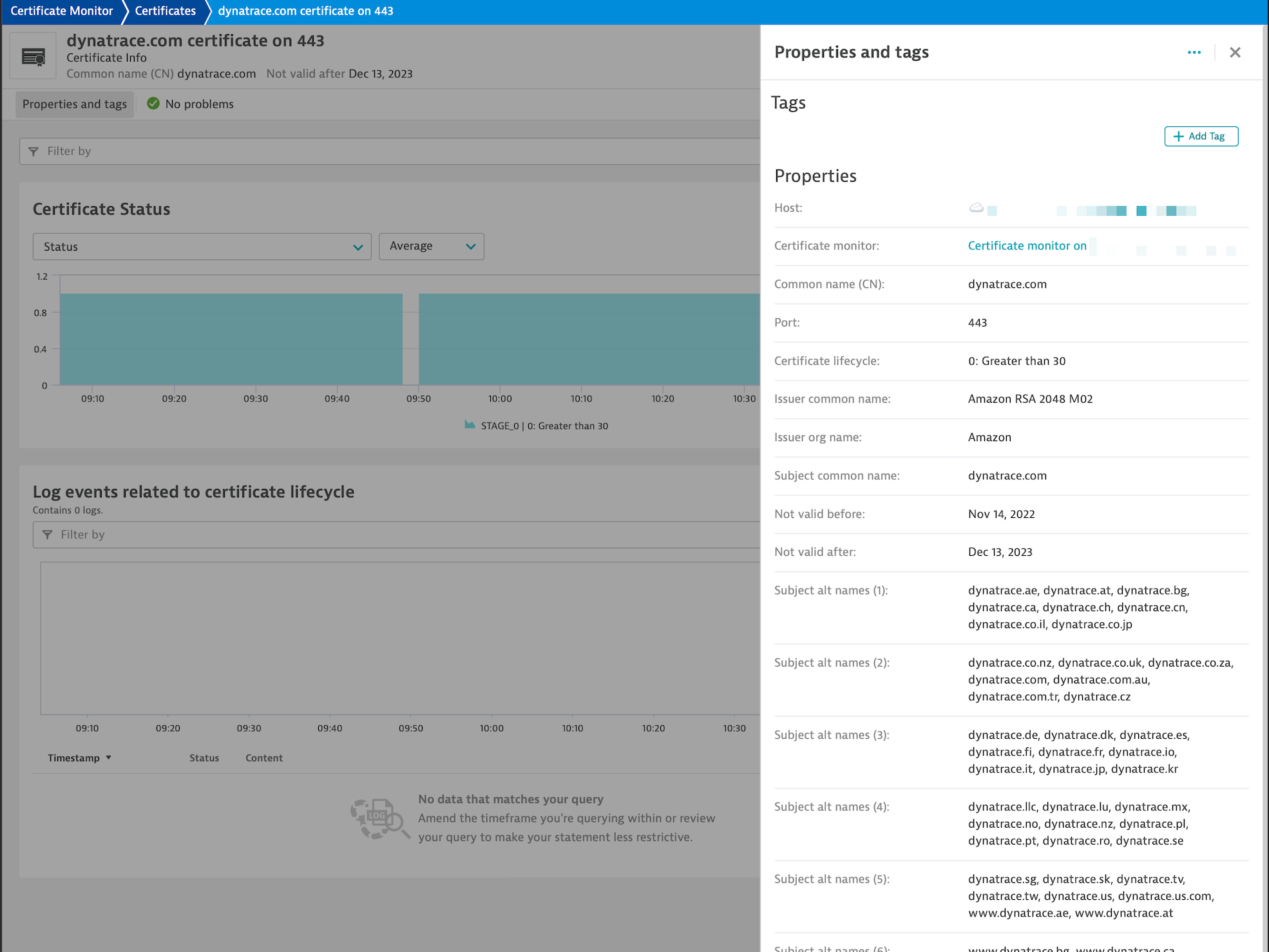
Discover, view and log SSL certificates. Raise configurable expiration alerts.
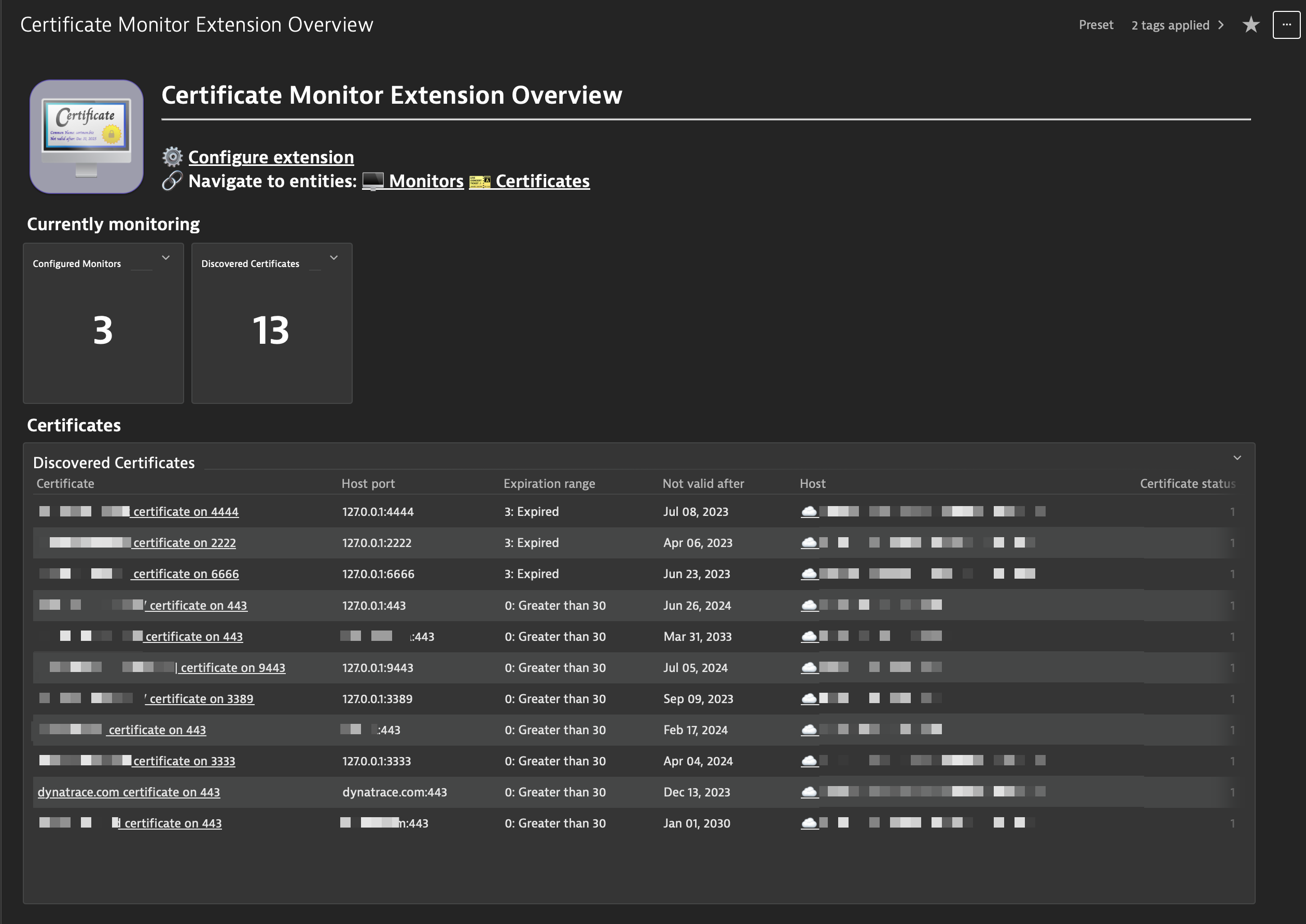
ExtensionThe SSL Certificate Monitor extension can be deployed on an ActiveGate or on any host with the OneAgent installed.
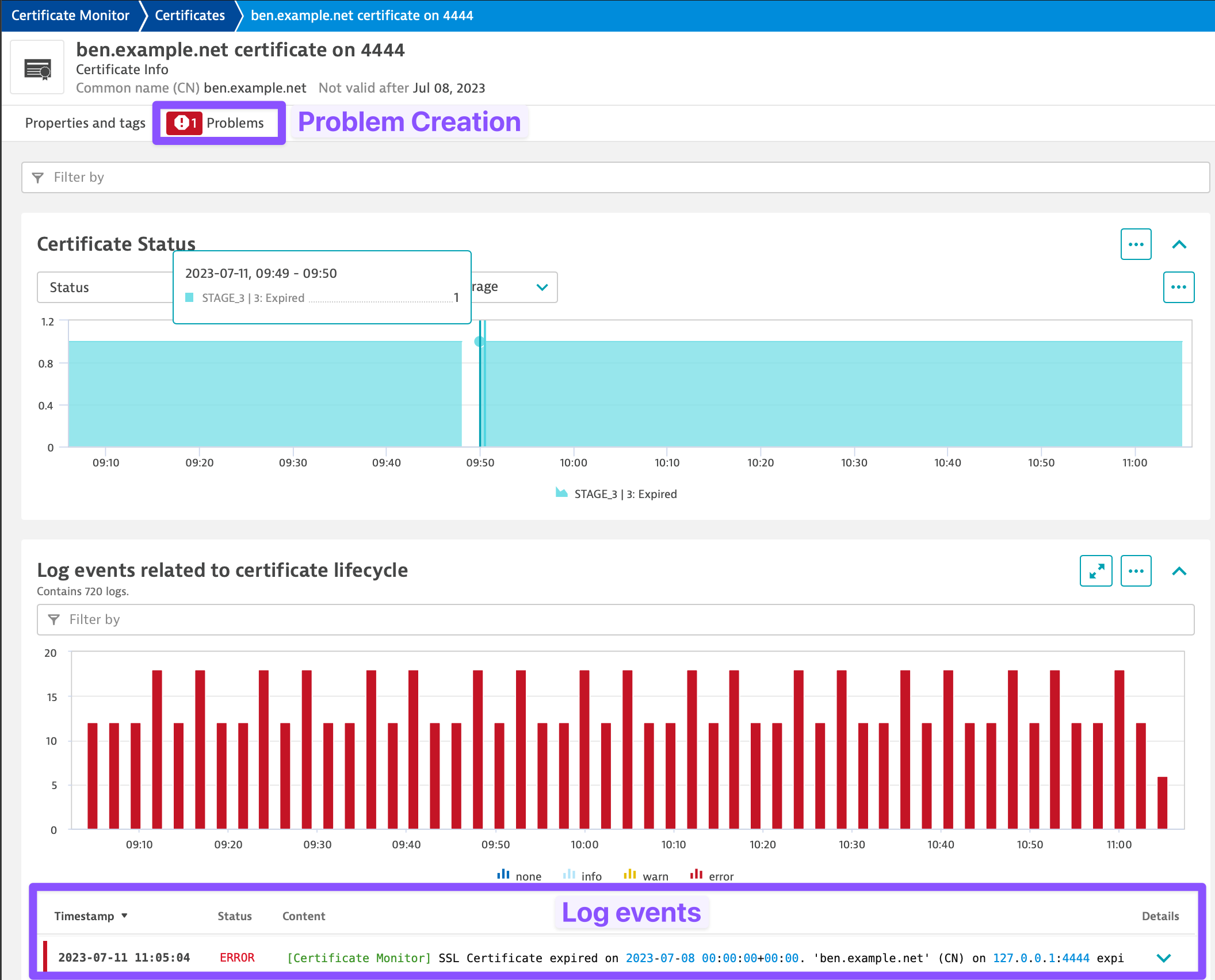
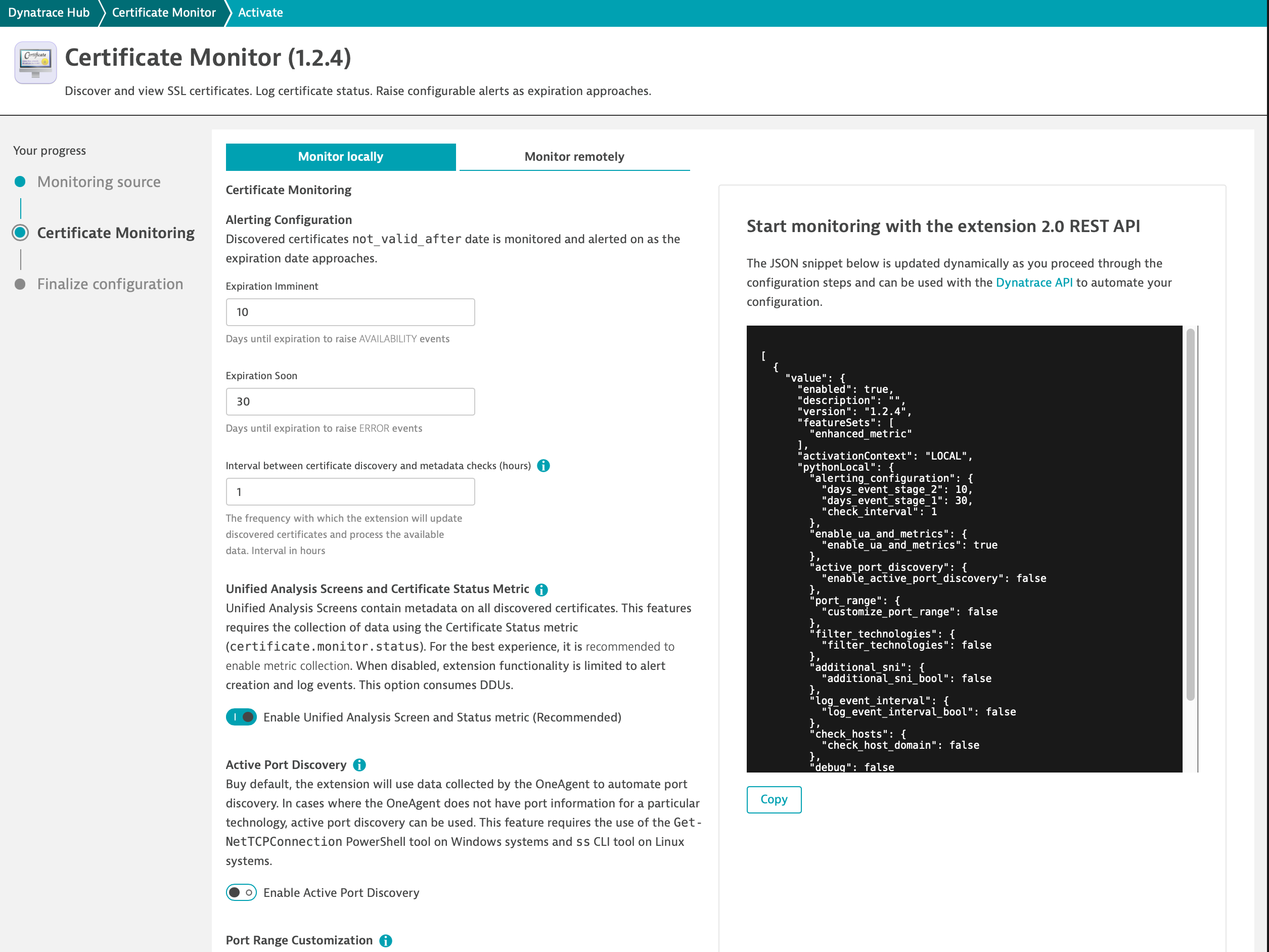
Both deployments types have configurable alerting intervals, allowing the raising of low severity problems for certificates in a user defined renewal window as well as a high severity alerts for imminently approaching expiration dates.
When deployed on an ActiveGate, the extension can be configured to perform certificate checks by specifying specific domains to check.
When deployed on an OneAgent, the extension will attempt certificate auto-discovery using data provided by the OneAgent.
Below is a complete list of the feature sets provided in this version. To ensure a good fit for your needs, individual feature sets can be activated and deactivated by your administrator during configuration.
| Metric name | Metric key | Description | Unit |
|---|---|---|---|
| Certificate status | certificate.monitor.status | The status of detected certificates | Count |
v1.10.17
This version requires EEC version 1.313+ and cluster version 1.313+.
This version requires EEC version 1.270+ and cluster version 1.309+.
In environments with older hosts that do not support modern TLS protocols, certificate collection can fail due to protocol mismatches. Previously, these hosts were effectively unreachable for certificate inspection, limiting visibility into legacy systems.
This version introduces fallback support for TLSv1 ciphers during certificate collection. This fallback is only used when the target server does not support higher TLS versions and is confined strictly to certificate gathering operations. We've also added support for DEC error codes, improved handling of certificates missing common_name or alt_name, and introduced a delay mechanism to ensure entities are created before problems are triggered. Support for 3rd generation UA cards has been enhanced, and the dt.security_context field has been added for improved security context tracking. Impact These changes improve compatibility with legacy systems, improve alerting for certificates that are first detected in a problem state and enhance certificate parsing.
When the extension is deployed locally (on a host with the OneAgent), the extension uses data collected by the OneAgent to collect a list of processes that have listening ports bound to them. Using this information, the extension attempts to establish a connection on that port and load any certificates that are present. Many of these detected port bindings do not have certificates bound to them and, as a result, no certificate is returned. In previous versions of the extension these ports would be checked for a certificate at each monitoring interval if no manual exclusion filters were set.
This version introduces automatic port blocklisting. When the extension fails to extract a certificate from a port, the port is automatically added to a persistent cache and removed from future certificate scans. This cache is specific to each monitoring configuration and is retained across extension restarts and configuration updates.
Some processes do not react well to unexpected TLS connections. Port blocklisting ensures that these ports are not continuously queried for certificates, reducing unnecessary network activity and potential side effects.
INFO logging will now contain all required information for most use cases. DEBUG logging should now only be needed during advanced troubleshooting.device.address dimensionThe Windows Certificate Store is composed of multiple "sub-stores," such as CurrentUser:Root, LocalMachine:Root, and others. It's common for identical certificates to exist in multiple sub-stores simultaneously.
This release introduces a fix that correctly identifies and distinguishes each instance of a certificate based on the specific sub-store it resides in. As a result:
This change aligns with real-world use cases. When a certificate expires and is replaced, it must be updated in location where it exists. By treating each instance separately, the system now mirrors this operational reality, improving reliability and clarity for administrators.
This version is a combined bug fix and feature update. Changes include:
YYYY-MM-DD format to make them sortableNOTE: This version requires that monitoring configurations be recreated. We apologize for this inconvenience but it is required to take advantage of new features. This extension is evolving rapidly and seeking to cover a wider array of use cases. As such, it may see other breaking changes before the end of the year.
domain.com:9999 syntax. Previously, all domains were checked on port 443