

Dynatrace (Bindplane) also has the highest score in three of five Use Cases in the 2026 Gartner® Critical Capabilities for Observability Pipelines
AI is changing the scale and complexity of observability. As organizations generate more telemetry across increasingly distributed environments, simply collecting more data isn’t the answer. Teams need greater control over what data they collect, how they process it, where they send it, and what they ultimately pay to store and analyze.
That makes the observability pipeline a critical part of the modern observability architecture.
Dynatrace (Bindplane) has been named a Leader in the 2026 Gartner® Magic Quadrant™ for Observability Pipelines.
The recognition follows Dynatrace’s acquisition of Bindplane in April 2026, which we believe expanded Dynatrace’s telemetry lifecycle capabilities across collection, pipeline management, analytics, and automation.
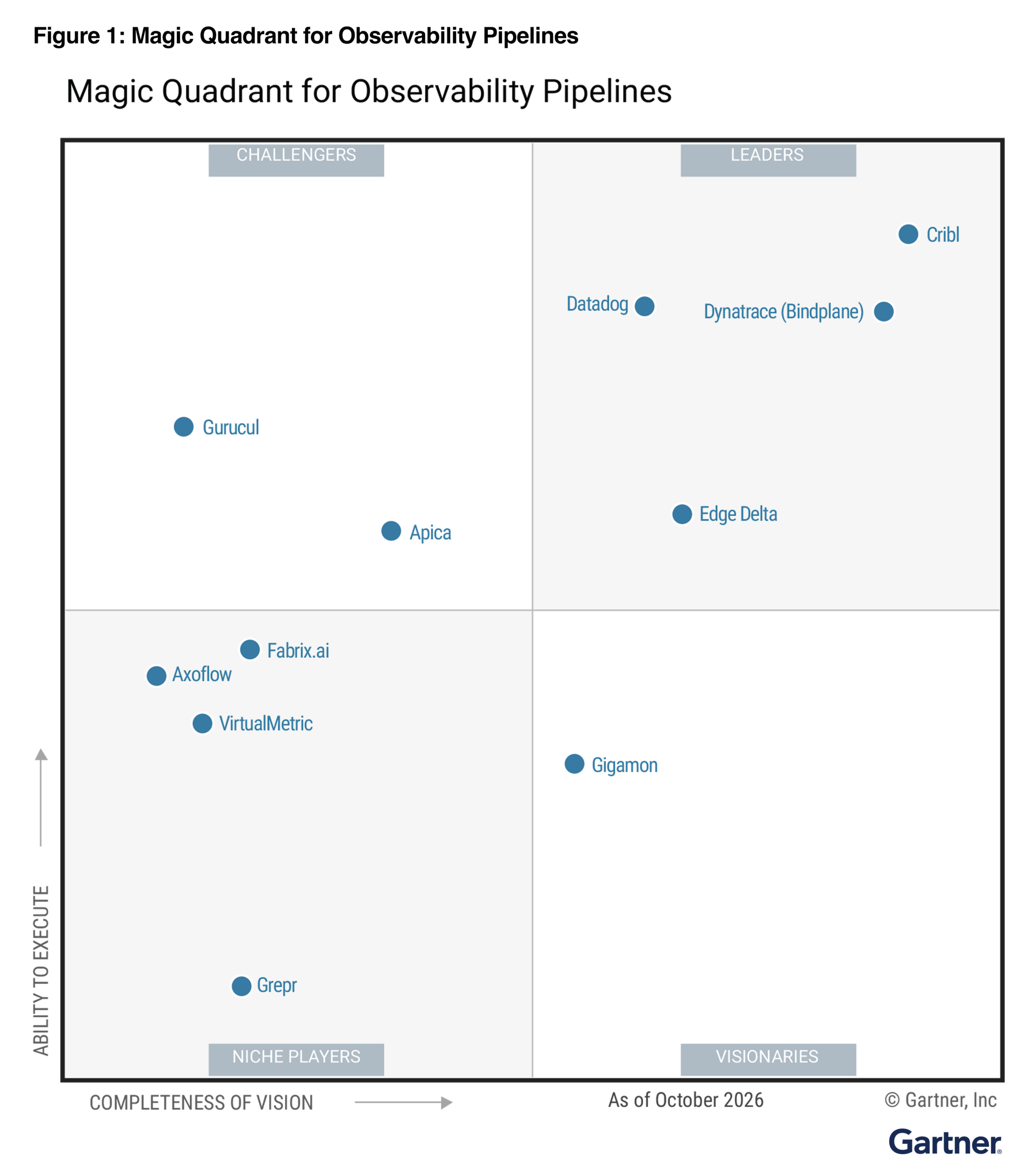
It is our opinion that the accompanying Gartner® Critical Capabilities for Observability Pipelines provides another perspective on Bindplane’s capabilities across operational Use Cases. Dynatrace (Bindplane) ranked:
Bindplane has the highest score in three of five Use Cases and ranked second for two across all five.
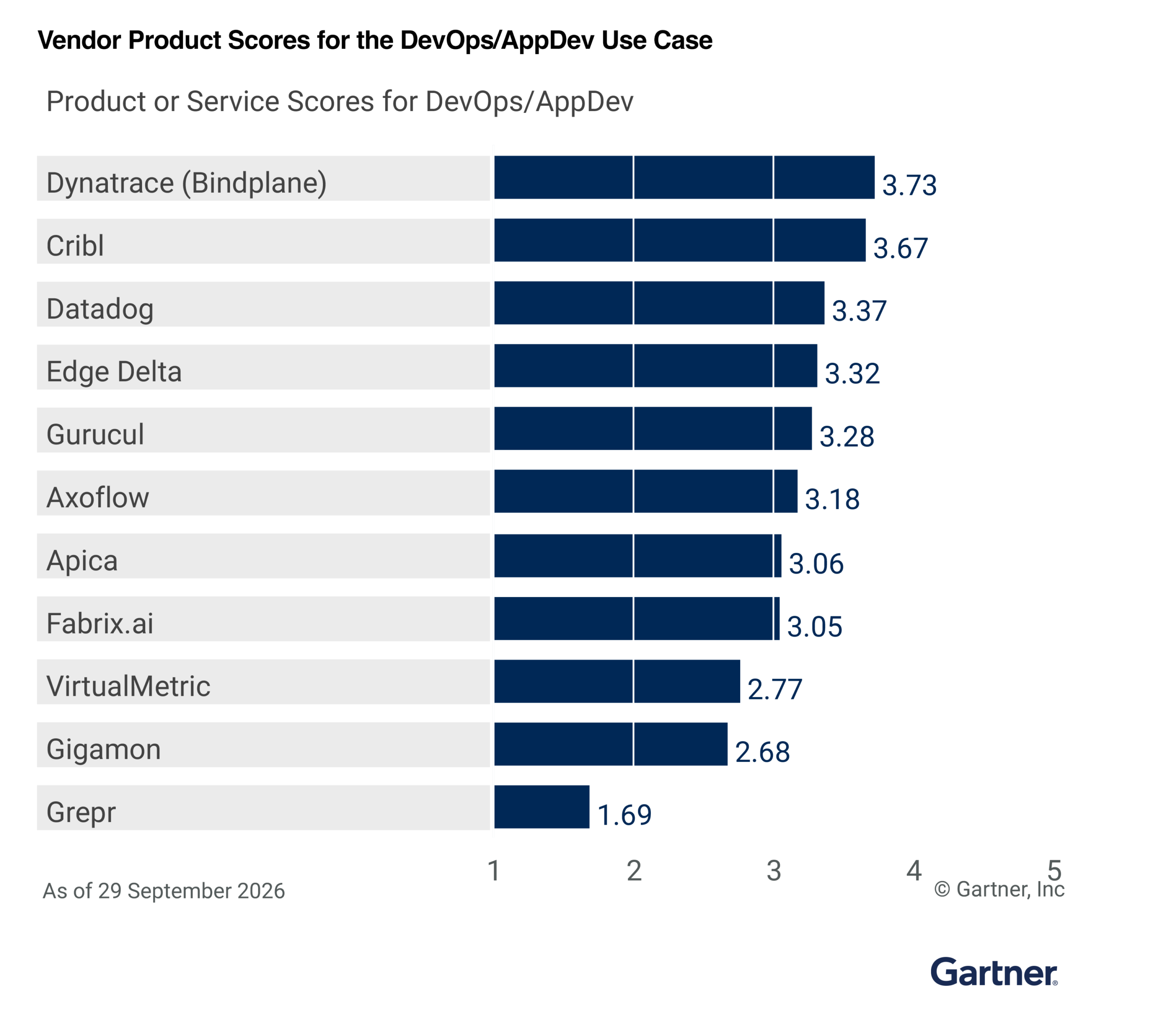
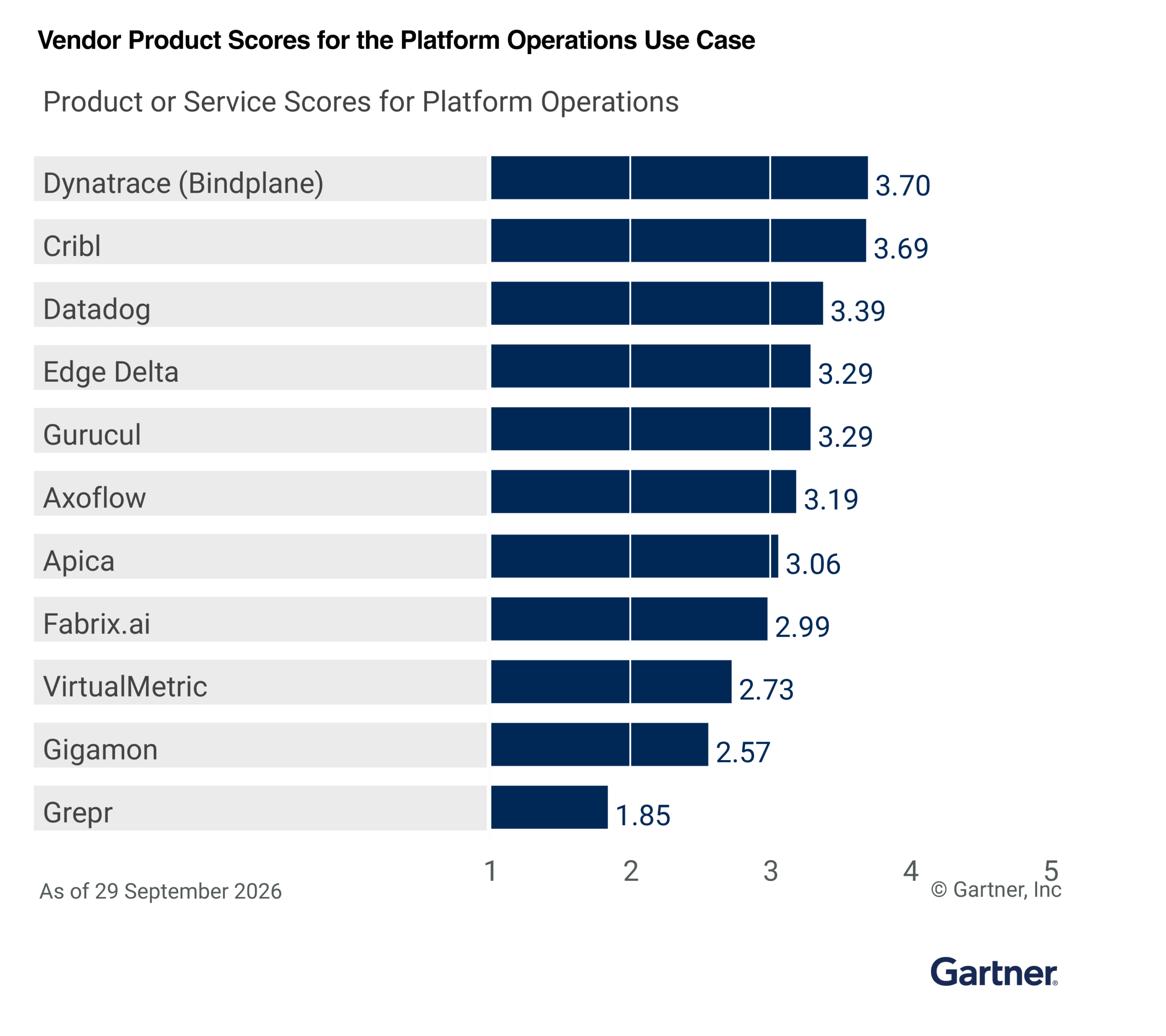
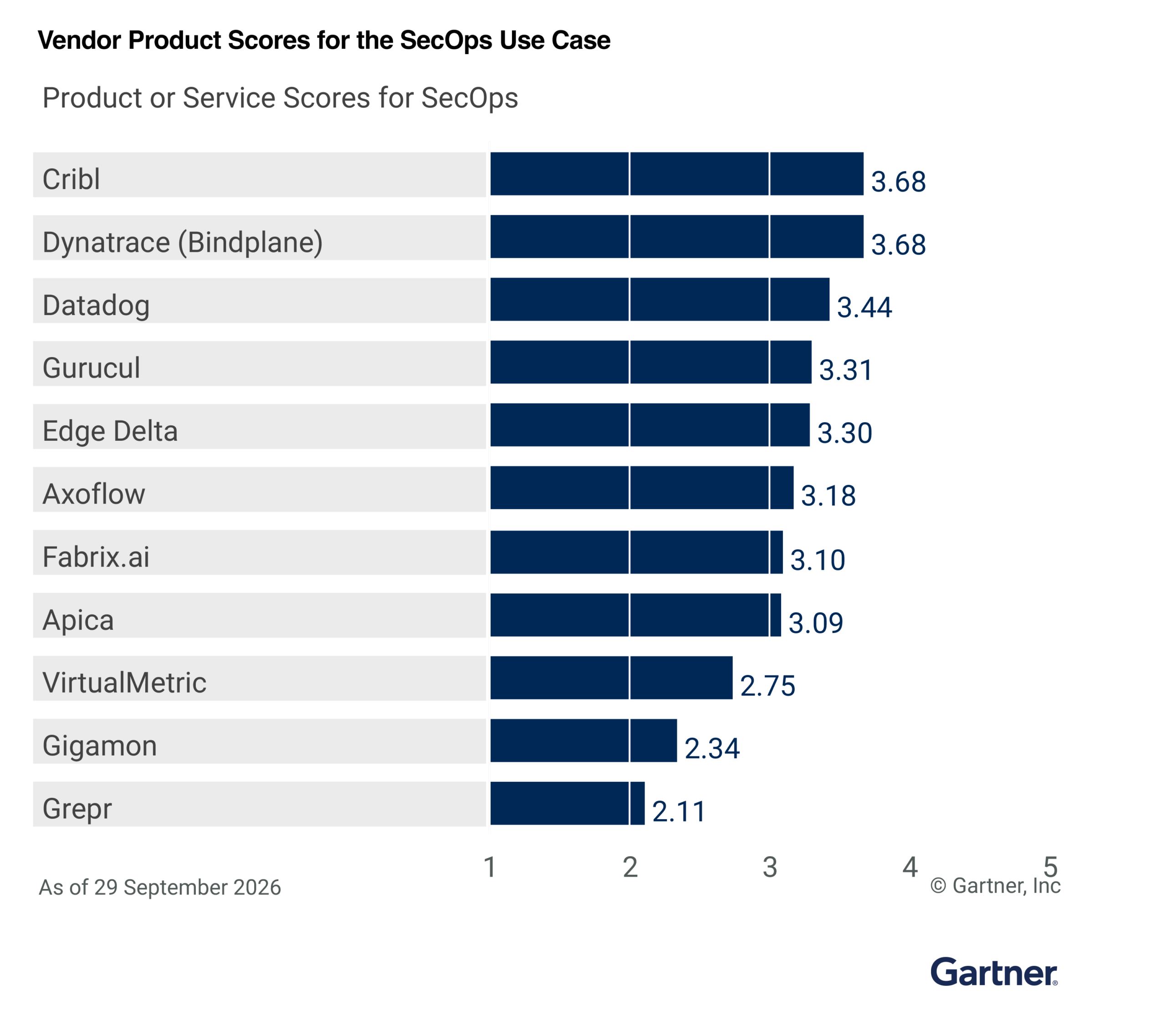
Together, we believe these reports reinforce something that is becoming increasingly important in the AI era: Organizations need a more intelligent, open, and governed approach to managing telemetry before it reaches its destination.
Control telemetry before ingestion
For years, many observability strategies have focused primarily on what happens after telemetry reaches an analytics platform. But exploding data volumes and increasingly complex environments are pushing an important decision upstream: What data should you ingest in the first place?
That question has implications for cost, governance, operations, and flexibility.
Bindplane provides a centralized control layer over OpenTelemetry collectors, enabling organizations to manage telemetry before it lands in downstream systems. The platform supports multivendor destinations, with an OpenTelemetry-native approach designed to preserve flexibility across the observability ecosystem.
That matters particularly as organizations standardize around OpenTelemetry. Rather than making telemetry management another source of lock-in, an open pipeline can give teams more control over how data moves across their environment and where it ultimately goes.
Put intelligence into the pipeline
Scale isn’t the only challenge. Someone still has to make sense of all that telemetry.
This is where intelligence inside the pipeline becomes particularly important.
The goal isn’t AI for AI’s sake. It’s to reduce the manual work involved in managing increasingly complex telemetry pipelines while helping maintain governance over what changes.
In our opinion that’s especially relevant for the DevOps and platform operations teams reflected in the Critical Capabilities results. Those teams need to manage telemetry across applications, infrastructure, clouds, and tools without turning the pipeline itself into another operational burden.
Reduce noise without sacrificing choice
Telemetry growth also has an economic consequence: more data can mean more downstream ingestion and storage costs.
The answer shouldn’t simply be to collect everything and sort it out later.
With an intelligent pipeline, teams can make decisions closer to the source, reducing unnecessary data volume and routing the telemetry that remains to the appropriate destination. Bindplane is built to control telemetry before ingestion: reducing volume, simplifying operations, and routing data across destinations using OpenTelemetry.
That combination of control and openness matters. Organizations shouldn’t have to trade better telemetry economics for greater vendor dependency.
Building toward a more autonomous telemetry pipeline
The next step is to make telemetry pipelines not only easier to manage, but increasingly capable of managing themselves.
For us, that progression is important: Open telemetry pipelines that give organizations control today, with greater intelligence and automation over time.
As AI expands both the volume of telemetry and the expectations placed on observability teams, the pipeline becomes more than plumbing between data sources and destinations. Bindplane turns that control point into an OpenTelemetry-native layer where teams can process and route telemetry, redact personally identifiable information, and review AI recommendations before deploying changes.
We believe the 2026 Gartner results reinforce the direction we plan to take with Dynatrace (Bindplane): control telemetry before ingestion, maintain the open-standards foundation with OpenTelemetry, and enhance automation without removing human oversight.
Gartner and Magic Quadrant are trademarks of Gartner, Inc. and/or its affiliates.
Gartner does not endorse any vendor, product or service depicted in its research publications, and does not advise technology users to select only those vendors with the highest ratings or other designation. Gartner research publications consist of the opinions of Gartner’s research organization and should not be construed as statements of fact. Gartner disclaims all warranties, expressed or implied, with respect to this research, including any warranties of merchantability or fitness for a particular purpose.
Frequently asked questions
What is an observability pipeline?
An observability pipeline collects, processes, enriches, and routes telemetry before it reaches downstream observability, security, and analytics platforms. This gives organizations more control over which data they collect, where they send it, and what they store.
How does Bindplane by Dynatrace use OpenTelemetry?
Bindplane provides a centralized control layer over OpenTelemetry collectors. Its OpenTelemetry-native approach enables teams to manage and route telemetry across multiple destinations while preserving flexibility across their observability ecosystem.
How does Bindplane use AI in observability pipelines?
Bindplane can apply AI before ingestion to help parse and classify telemetry and detect data-quality anomalies. It can also redact personally identifiable information before storage and provides preview modes so teams can review AI recommendations before deploying changes.


Looking for answers?
Start a new discussion or ask for help in our Q&A forum.
Go to forum